 Mobile: +86 15890068607
 Email: bella@nanbei-china.com
Mobile: +86 15890068607
Email: bella@nanbei-china.com
Email: bella@nanbei-china.com
Mobile: +86 15890068607
Email: bella@nanbei-china.com
1. Installation Location: The glass reactor should be installed in a high-pressure vibration chamber that meets explosion-proof requirements. When multiple reactors are installed, they should be installed separately, with each pair separated by a safe explosion-proof partition. Each operating room should have a passage and exit to the outside. When explosive media are present, ensure good ventilation at the equipment location.
2. After opening the packaging, check the equipment for damage. Assemble the equipment according to the structural diagram based on the equipment model. Verify all accessories against the packing list. If the heating method is heat transfer oil or electric heating, there is no heat transfer oil in the equipment jacket. When using, please purchase the appropriate type of heat transfer oil according to the operating temperature (note that the heat transfer oil must not contain water). When adding oil, open the oil filling hole in the jacket and the oil level port at the top of the jacket. Add oil through the oil filling hole until oil flows out of the oil level port. Then tighten the oil level port, but do not tighten it completely to avoid pressure buildup.
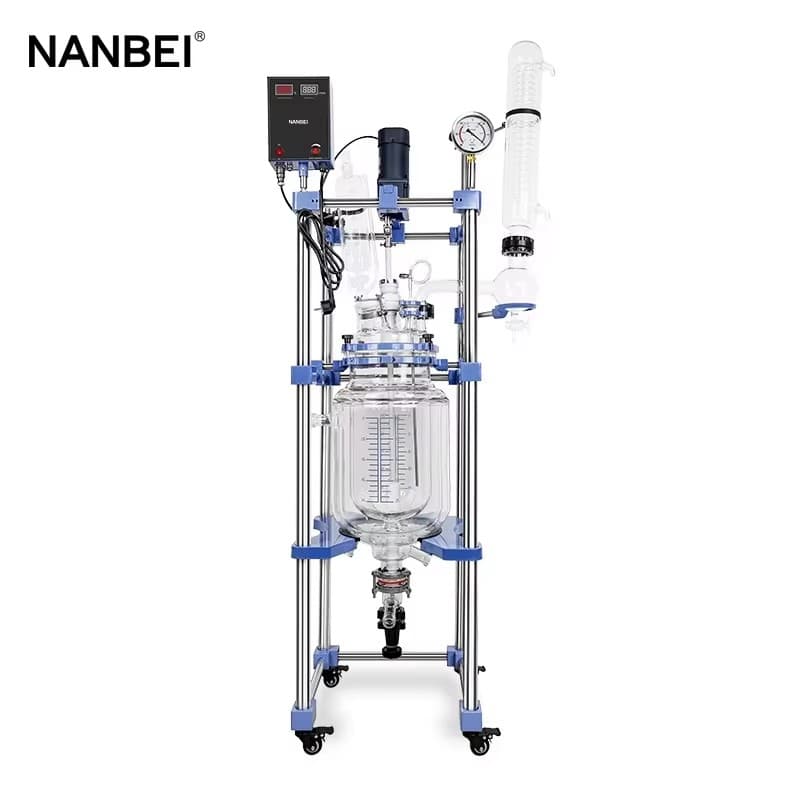
3. Installation and Sealing of the Vessel Body and Lid: The vessel body and lid use a gasket or a line contact between a conical surface and a curved surface. Tightening the main nut ensures they are pressed together for a good seal. When tightening the nut, it is essential to gradually increase the force diagonally and symmetrically multiple times, applying even force. The lid must not be tilted to one side to prevent damage to the sealing surface or excessive wear. The sealing surfaces require special care. Before each installation, clean the upper and lower sealing surfaces with soft paper or cloth, taking particular care not to leave scratches on the sealing surfaces of the vessel body and lid. With proper operation, even after tens of thousands of uses, if the sealing surface is damaged, it will need to be repaired to achieve a good seal. When removing the lid, lift it slowly up and down to prevent the sealing surfaces between the vessel body and lid from colliding. If a gasket seal (PTFE, aluminum, copper, asbestos, etc.) is used, tightening the main nut will achieve a good seal.
4. For valves, pressure gauges, and safety valves, tightening the nuts on both sides achieves a seal. The arc-shaped sealing surfaces at both ends must not rotate relative to each other. All screw connections must be lubricated with lubricant or a mixture of oil and graphite during assembly to prevent seizing. Valve usage: Needle valves use line seals; simply turning the valve needle gently to press the sealing surface achieves a good seal. Excessive force should be avoided to prevent damage to the sealing surface.
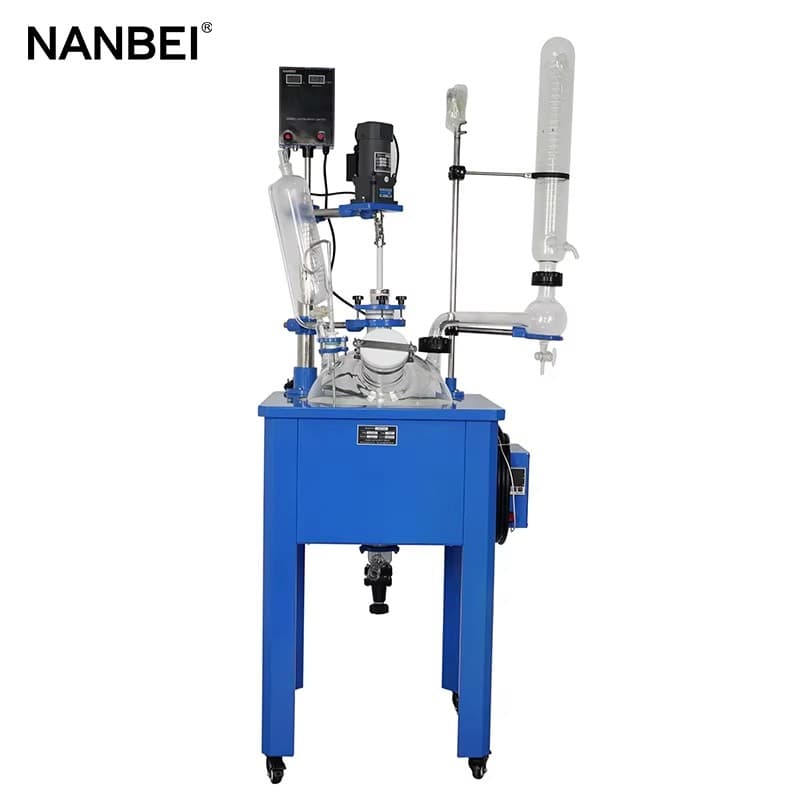
5. After the lab glass reactor is installed, pressurize it with a certain amount of nitrogen for 30 minutes and check for leaks. If a leak is found, use soap suds to locate the leak point in the pipeline or at the pipe opening. After locating the leak, release the gas and tighten the screws. Then, pressurize it with nitrogen again to ensure there are no leaks before starting work.
* HOT ARTICLE
Welcome to the official website of the Nanbei Group *
